Waterproofing, the straight version
Waterproofing or encapsulation — which one do I actually need?
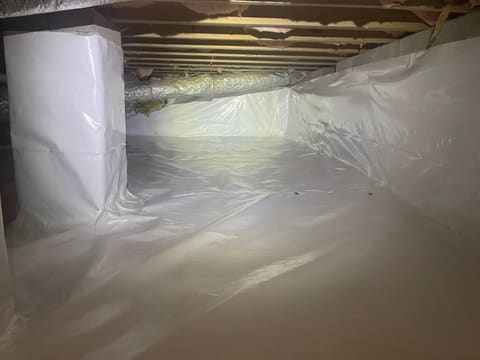
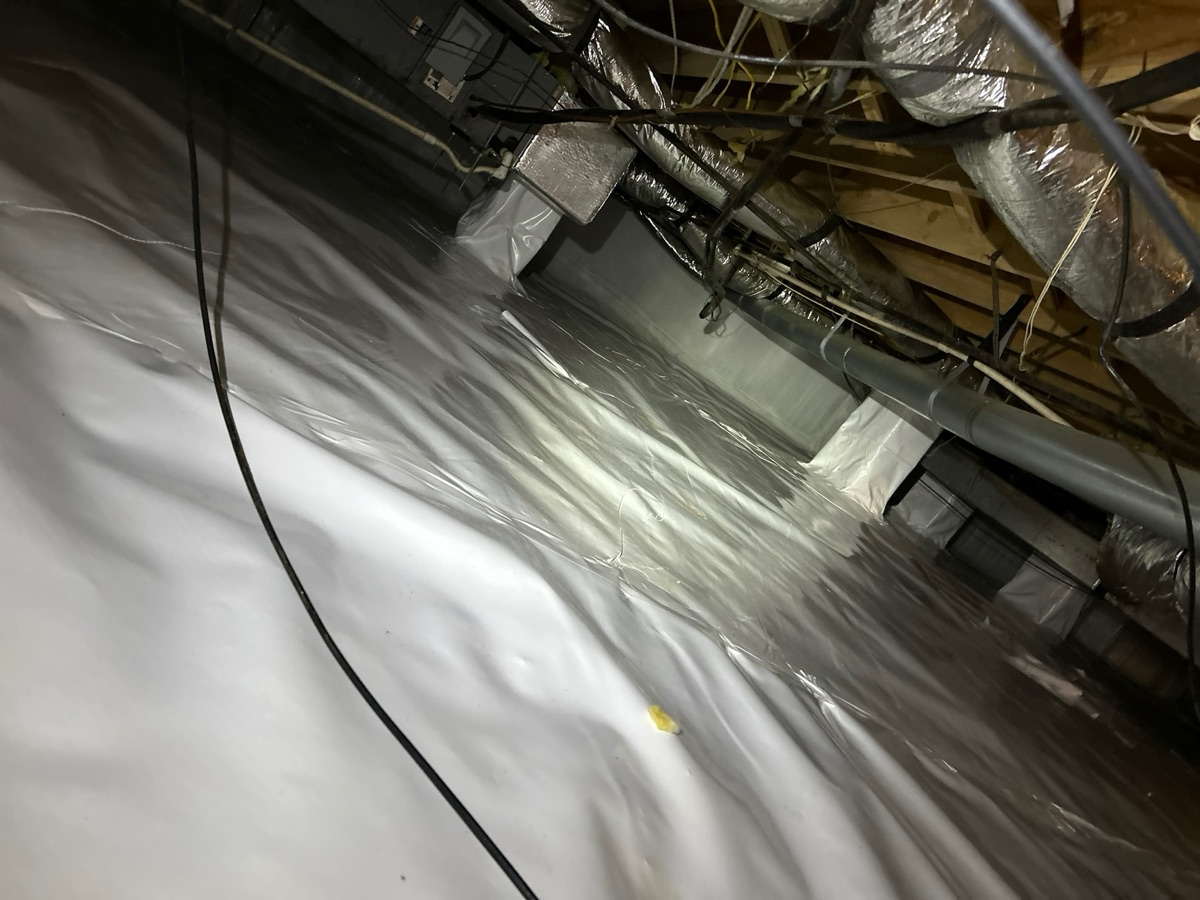
Here's the straight answer almost everyone gets stuck on. Waterproofing is for active water — water that pools, runs, or stands under your house — and the fix is drainage: an interior drain, a sump pump, and grading. Encapsulation is for moisture — damp air, humidity, that musty smell — and the fix is sealing: a vapor barrier, closed vents, a dehumidifier.
Here's the rule that matters: if you have active water, you waterproof first. Sealing a wet crawl space in plastic just traps the water against your foundation and makes things worse. Once the water's controlled and the space is dry, encapsulation is the finishing step that keeps it that way. Plenty of crawl spaces need both, in that order — and we'll tell you honestly which one yours needs right now instead of selling you the one with the bigger ticket.
How do I know I have a water problem and not just humidity?
You can see it, not just smell it. The tells: standing water or puddles after rain, a water line or mud on the piers and vapor barrier, a sump pump that runs constantly or has quit, and water running in from a wall or footing during a storm. If it's wet enough to see, that's water — and that's this page.
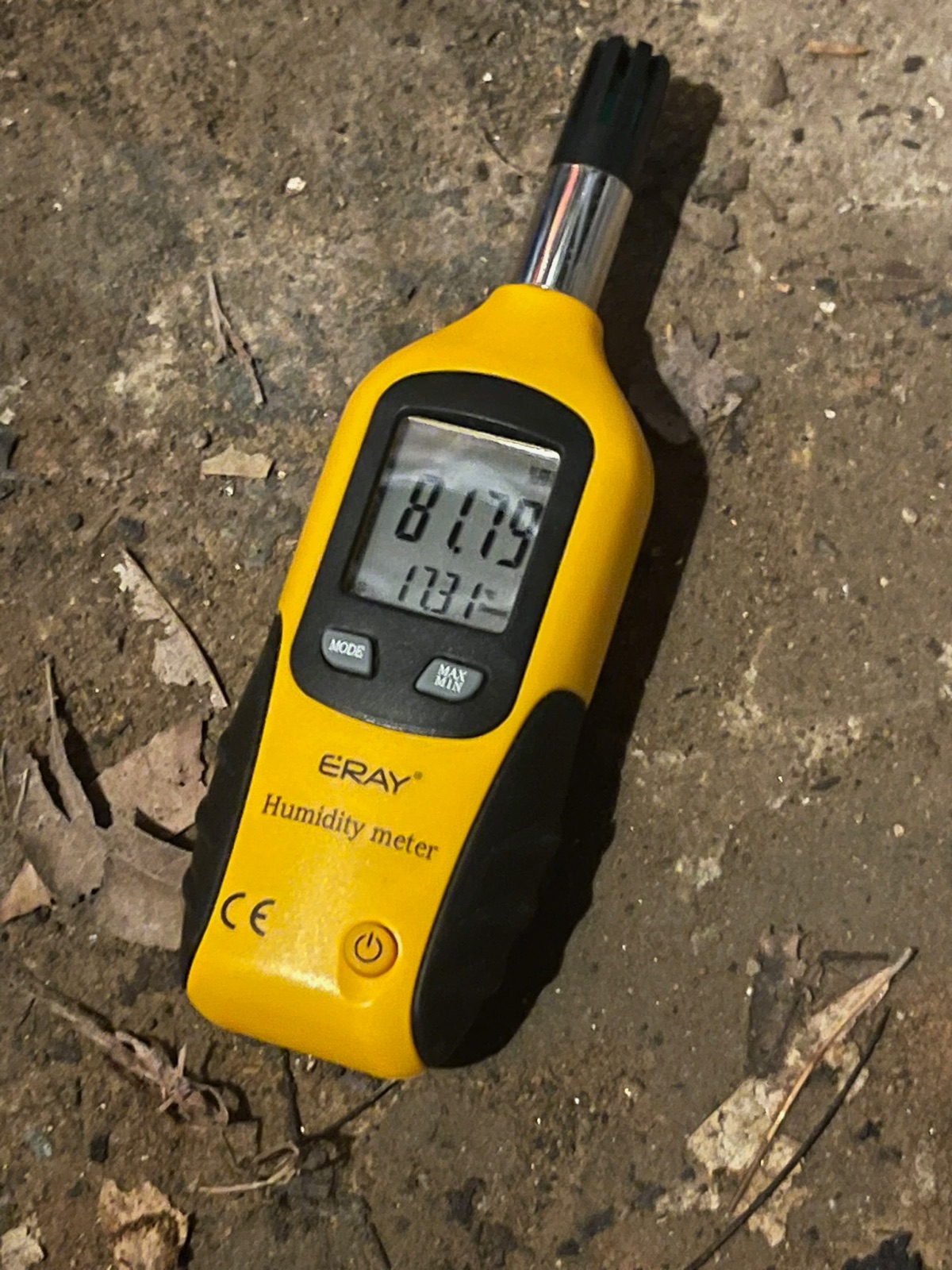
Damp air, condensation, and a musty smell with no visible water are a different animal — that's a moisture problem, and the fix is encapsulation, not drainage. When the water has sat long enough to rot joists or sag the floor above it, that crosses into crawl space repair. We sort out which of these you're actually dealing with before we quote a thing.
How do you get water out of a crawl space?
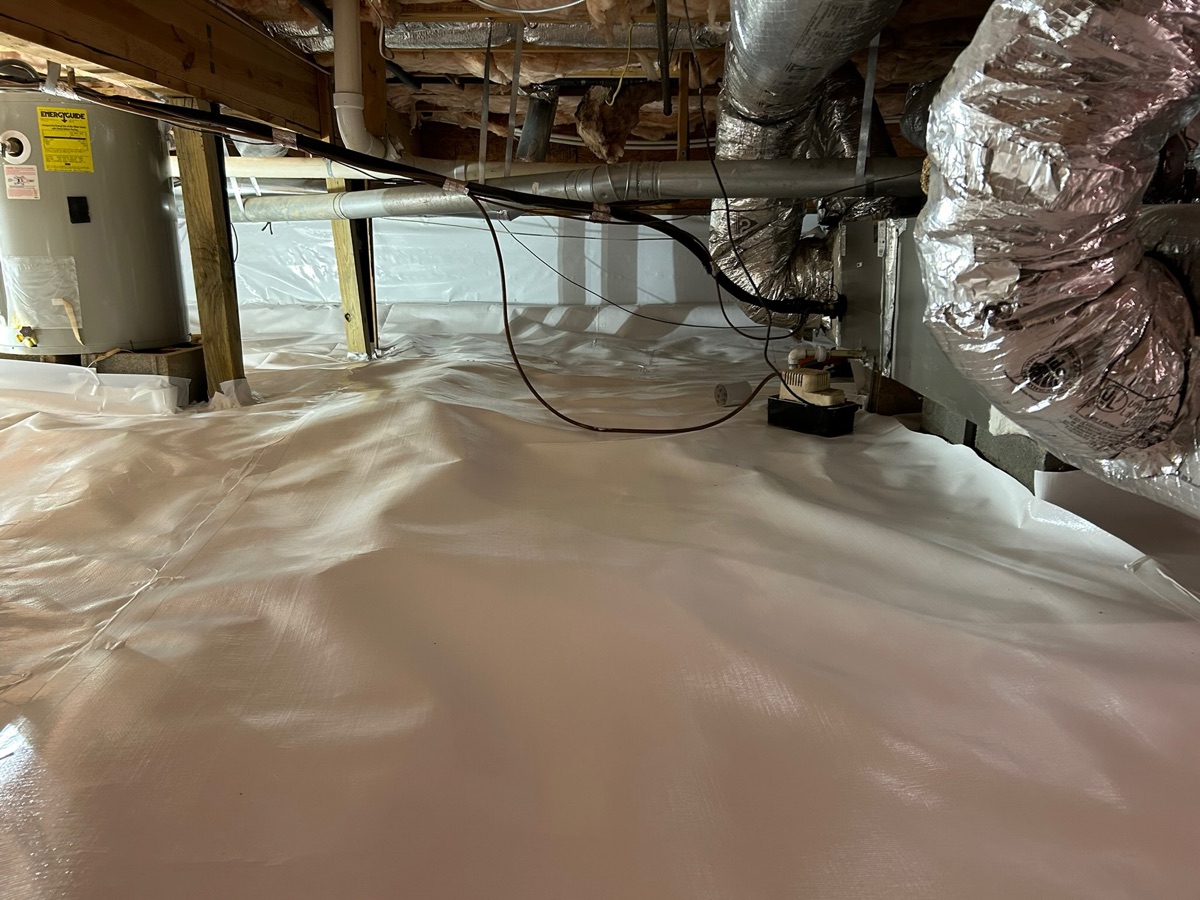
You give the water a path out and a place to go. We dig in an interior drain along the footing that catches water as it enters, route it to a sump basin, and a sump pump carries it up and away from the house. Outside, we correct grading and downspouts so less of it ever reaches the crawl space.
That's the whole logic of a waterproofed crawl space — collect, pump out, and reduce the supply. It's a system working together, which is why a shop vac and a fresh roll of plastic never hold up past the next hard rain. The itemized pieces of that system are below in what we install.
Why does my crawl space flood after it rains?
It comes down to our soil. Atlanta sits on red clay, which holds water and drains slowly. After a hard rain the clay around your foundation saturates and builds pressure, pushing water through any gap, crack, or low spot into the crawl space. With nowhere to go, it pools under the house and sits there for days.
Older homes feel it worst. A lot of places around Decatur, Kirkwood, Grant Park, and out through Marietta went up decades ago with no interior drainage and grading that's since settled toward the house. They were never set up for what our clay does after a storm. We've spent enough time under Atlanta-area homes to know where your neighborhood's water tends to come from — and the fix is drainage that gives it an exit, paired with grading so less of it ever arrives.
What does crawl space waterproofing cost in Atlanta?
It depends on how much water you've got and where it's coming from, so we won't pin a one-size number on a job we haven't seen. A seasonal damp spot needing a short run of drain is a different scope from a crawl space that floods every storm. The things that move the number:
| What affects the price | Why it moves the number |
|---|
| Linear feet of interior drain | More perimeter to protect means more drain to install. |
| Sump pump — new vs. replacement | A full basin and pump is more than swapping a failed unit. |
| Exterior grading and downspout work | Correcting the outside source adds scope beyond the drain. |
| Severity and source of the water | A wet corner vs. a crawl space that floods are different jobs. |
| Access | A tight, low crawl space is slower and harder to work in. |
The free inspection is where you get a real figure. We go under, find where the water's actually coming from, and put the scope and the price in writing before you commit to anything. If it's a bigger project, we offer interest-free financing so you can spread it out, and every repair we make carries a 2-year warranty. If sealing comes after — encapsulation runs about $5 to $7 per square foot once the space is dry — we'll scope that with you too, in the right order.