Crawl space repair, the straight version
What does crawl space repair cover?
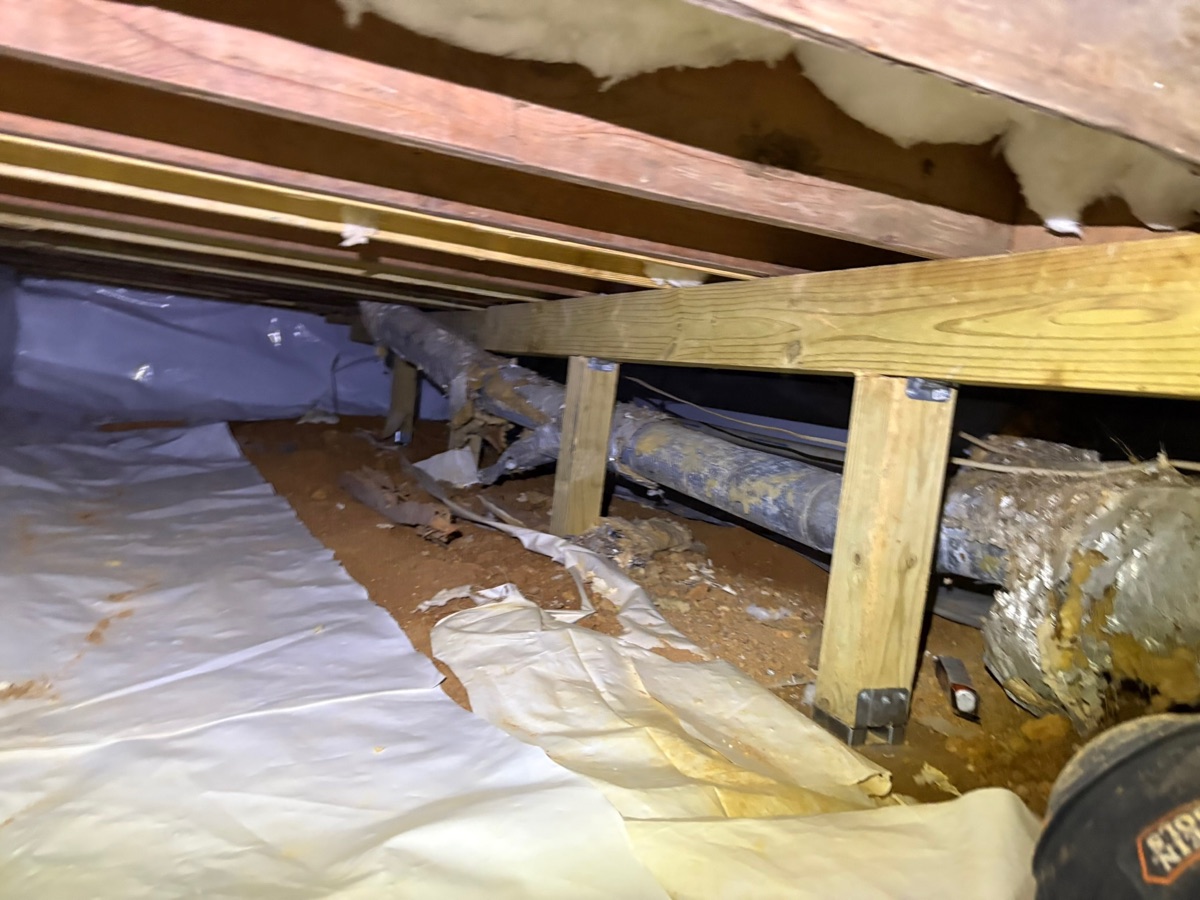
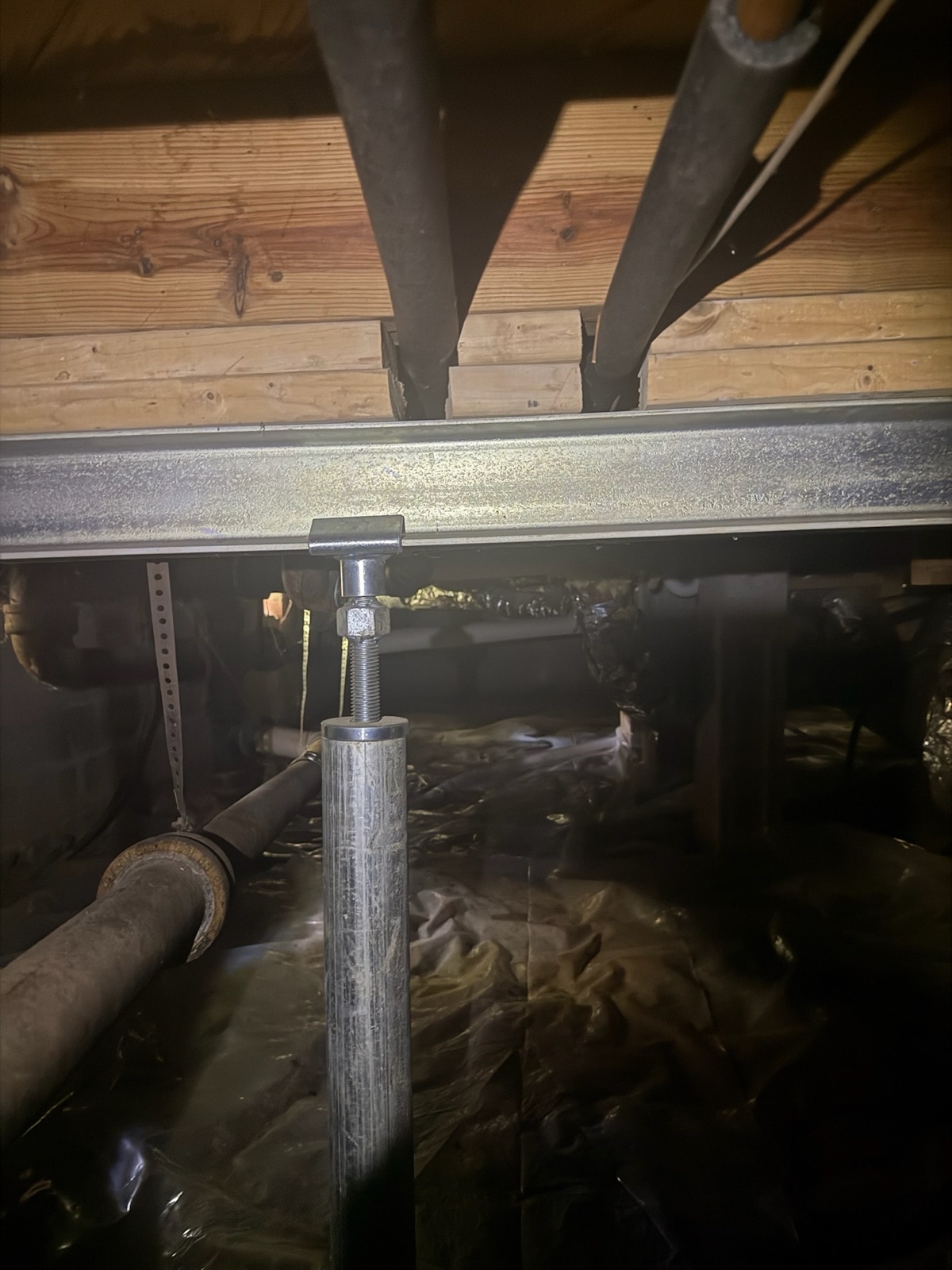
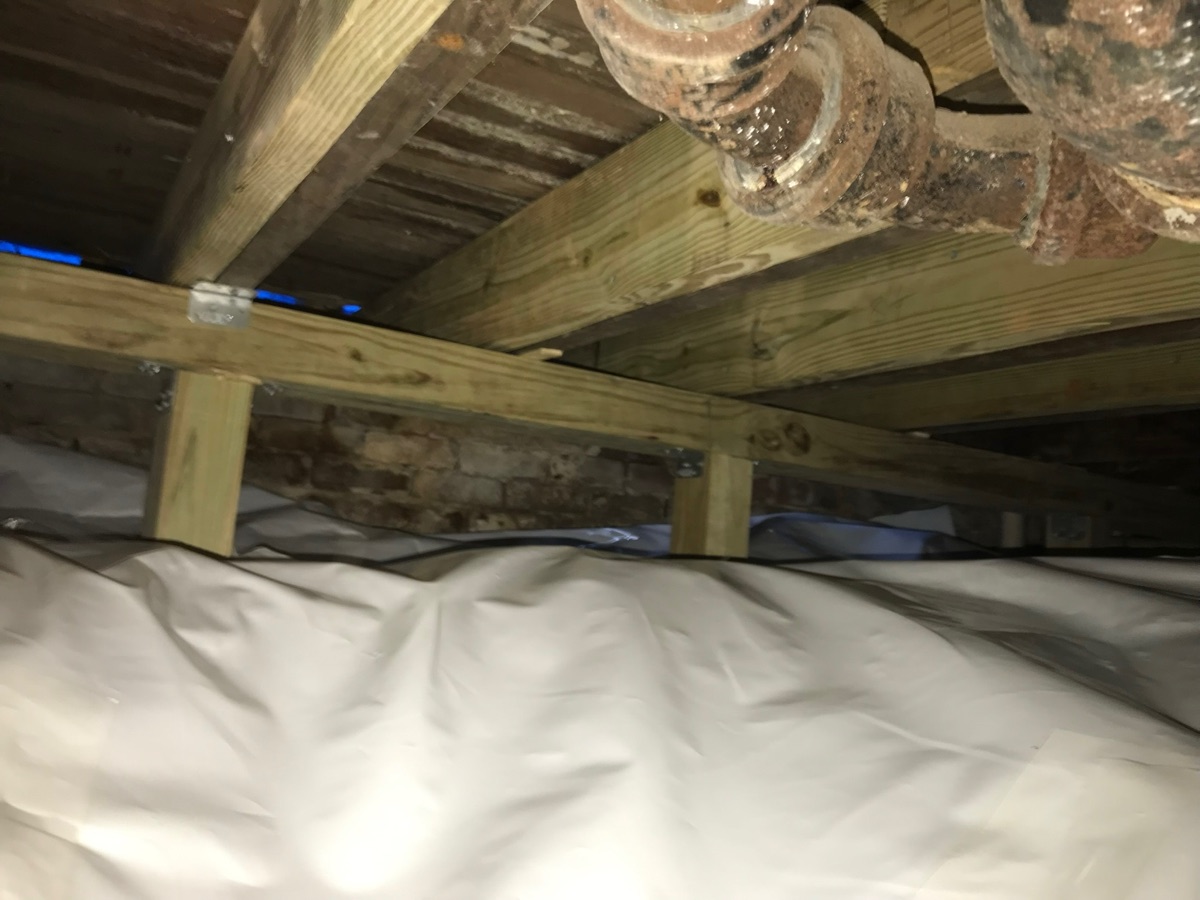
Crawl space repair means restoring the structure under your floors after moisture, water, or age has damaged it. On most Atlanta jobs that's repairing or replacing rotted joists and girders, resetting support jacks where the floor has dropped, reinforcing undersized framing, and dealing with the rot's source.
It's the structural side of crawl space work — separate from sealing the space or moving water out of it, though the three usually go together on the same house.
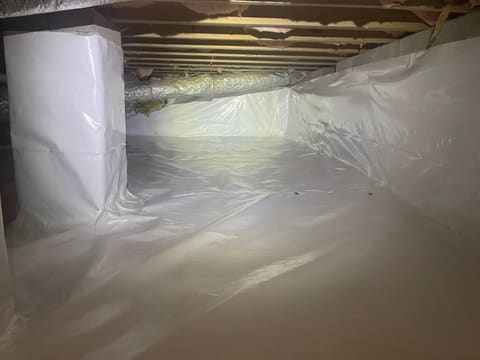
If your problem is humidity and musty air rather than failed wood, that's crawl space encapsulation. If it's standing water after a storm, that's crawl space waterproofing. This page is for the house where something already broke.
Why are my floors sagging over the crawl space?
Usually because something under them gave way, and in Atlanta the most common cause is moisture. Damp air and ground water rot the floor joists and main girder over time until they can't carry the load, and the floor drops. Sometimes it's the supports instead — undersized posts, or footings that settled into the clay.
Sagging floors are the symptom you notice first, but they travel with others. These are the tells that the structure under your floors needs a look:
- Floors that sag, dip, or bounce when you walk across them
- Doors and windows that suddenly stick or won't latch
- Gaps opening between the floor and the baseboards
- Visible rot, cracking, or sagging in the joists or the main beam
- Support posts that lean, rust, or sit on crumbling footings
- An inspection report flagging structural or moisture damage in the crawl space
Any one of those is worth a look. Several together means call sooner rather than later — structural problems don't hold still, and a joist that's halfway gone doesn't wait for a convenient time to finish failing. The only honest way to know which fix yours needs is to get under there: we measure the slope, find the failed members, and read what caused them before we quote a thing.
How do you fix the cause, not just the damage?
Here's the part that matters: repairing the wood without fixing what rotted it just buys you time. If the crawl space stays damp, the new joists rot too, and you've paid us to put fresh lumber into the same wet hole. So when we find structural damage, we find the source in the same trip.
If it's chronic moisture and humidity, the long-term fix is encapsulation — sealing and drying the space after the repair holds. If it's active water pooling under the house, that's crawl space waterproofing — interior drainage and a sump first, then the structural work. And if the movement traces down into the footings or a settling foundation, it crosses into foundation repair. We'll tell you which one your crawl space actually needs, and we won't sell you a system you don't.
Why do Atlanta crawl spaces fail in the first place?
It's the soil and the housing stock working together. Our red clay holds water against the structure and stays damp for days after a storm, and the long humid stretch from May through September keeps the wood under your floors wet far more than it should be.
Clay doesn't drain that moisture off the way sandy soil does — it pushes it up through the ground and traps it in an open, vented crawl space, right against the framing.
Then there's the age. A lot of homes around Decatur, Kirkwood, Grant Park, and out through Marietta went up decades ago with undersized supports and minimal moisture protection by today's standards. Put decades of damp air and a few undersized posts together and you get exactly the sagging, rot, and failed supports we get called for. We've spent enough time under Atlanta-area homes to know what your era and neighborhood tend to hide.
What does crawl space repair cost in Atlanta?
It depends entirely on what failed and how much of it. Sistering a couple of joists is a different job from resetting the supports and replacing a rotted girder, so we won't pretend otherwise with a one-size number. The honest figure comes from getting under your house.
The big drivers are how many structural members are damaged, whether the supports and footings need replacing, the severity of the rot, how tight the crawl space is to work in, and whether we also have to stop the moisture or water behind it.
The free inspection is where you get a real figure. We go under, find the cause, document the damage with photos, and put the scope and the price in writing before you commit to anything. If it's a bigger project, we offer interest-free financing so you can spread it out, and every repair we make carries a 2-year warranty. If a job genuinely calls for a structural engineer's stamp, we'll tell you — we'd rather point you right than oversell.