My crawl space or basement is flooding right now. What do I do?
First, a few things that help before anyone gets there: if it's safe, kill power to the affected area, move what you can up off the floor, and stay out of standing water with anything electrical still running. Then call us. We're available 24/7 for active flooding, so you're not sitting with rising water until Monday morning. Call now at {{ site.phone.display }} and we'll get someone headed your way.
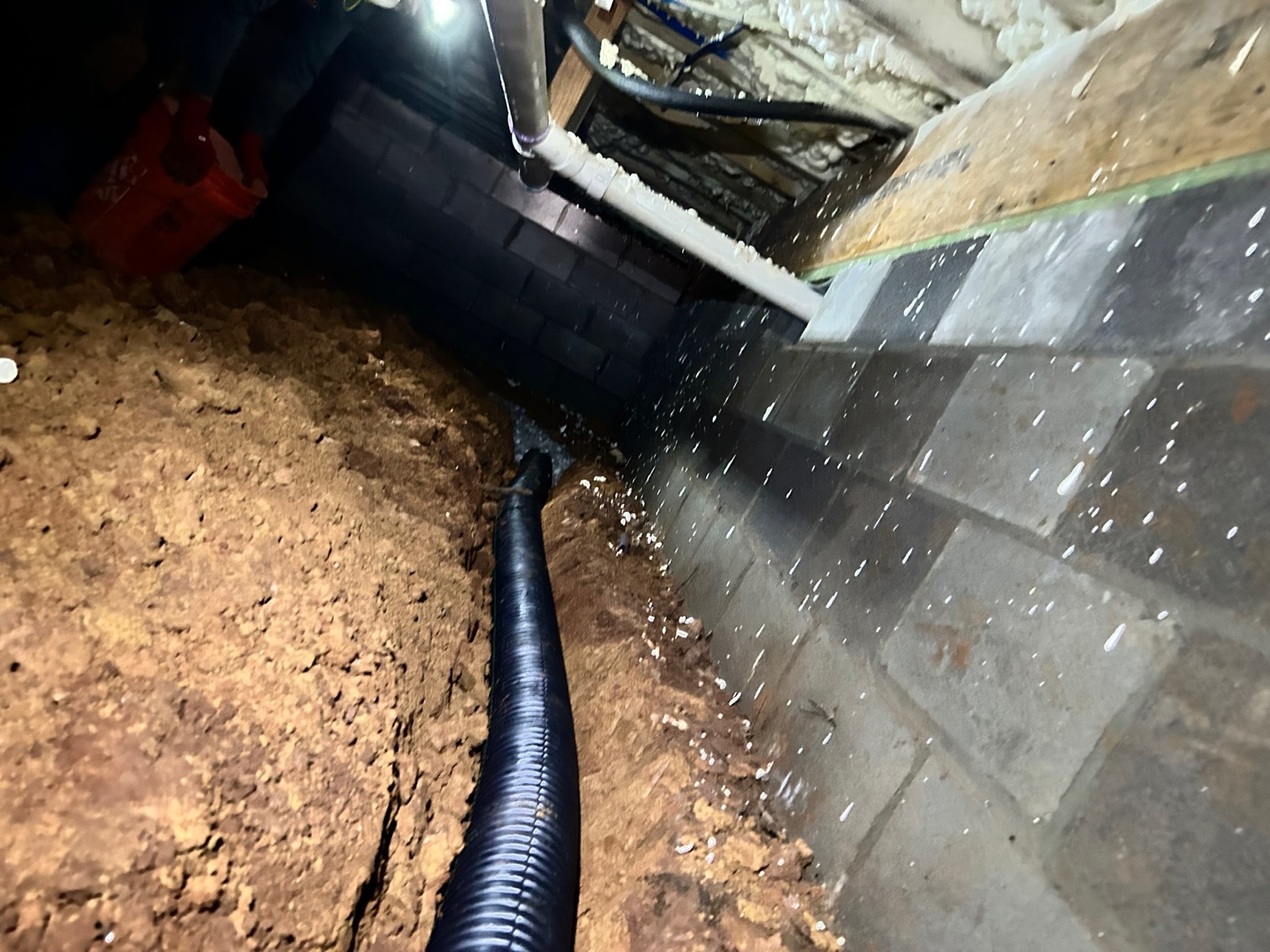
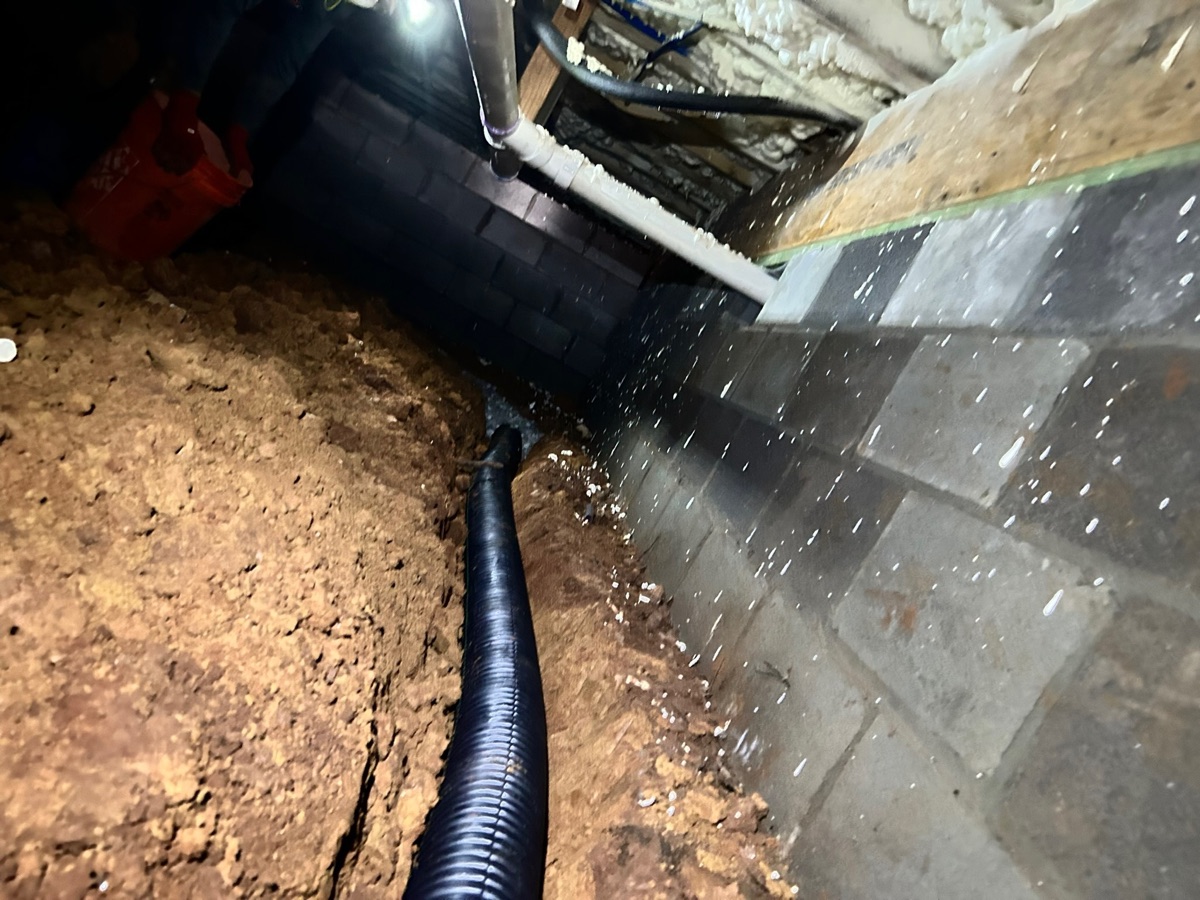
Once we're on site, the first job is getting the standing water pumped out and the space stabilized enough to see what we're dealing with.
What causes water damage in Atlanta crawl spaces and basements?
Most of the time it's our soil doing what it does. Atlanta's red clay holds water against your foundation for days after a hard rain and drains slowly, so pressure builds and finds the cracks, the cold joints, and the seam where the wall meets the floor. Add our long humid stretch from May through September and even a space that isn't actively flooding stays damp enough to do slow, quiet damage over time.
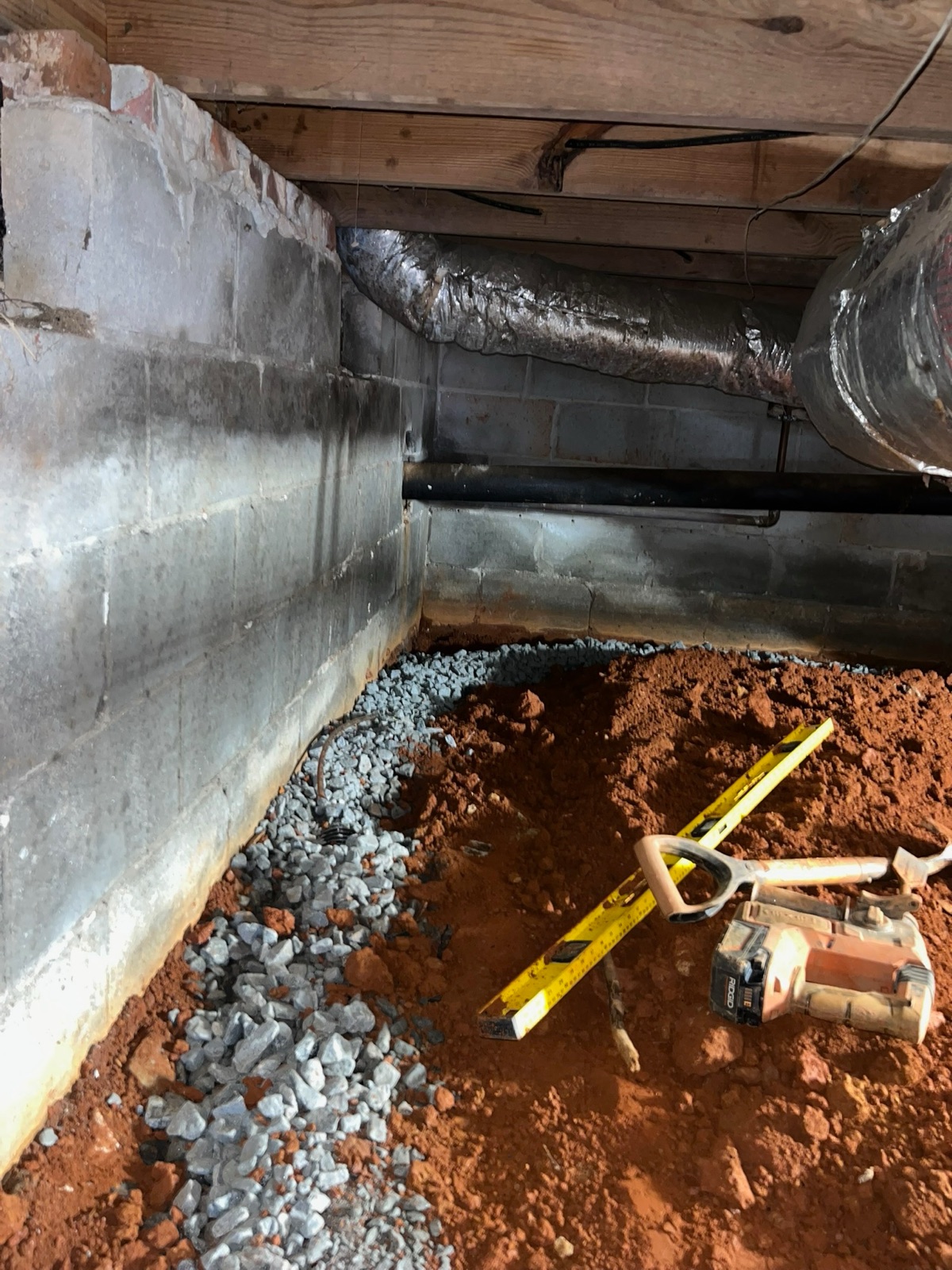
The other common sources are a failed or undersized sump pump, poor grading dumping runoff toward the house, and older foundations in neighborhoods like Decatur, Kirkwood, and East Atlanta that were built before modern drainage standards. Getting the water out is step one. Figuring out which of these let it in is what keeps it from happening again.
What can be saved after water damage, and what can't?
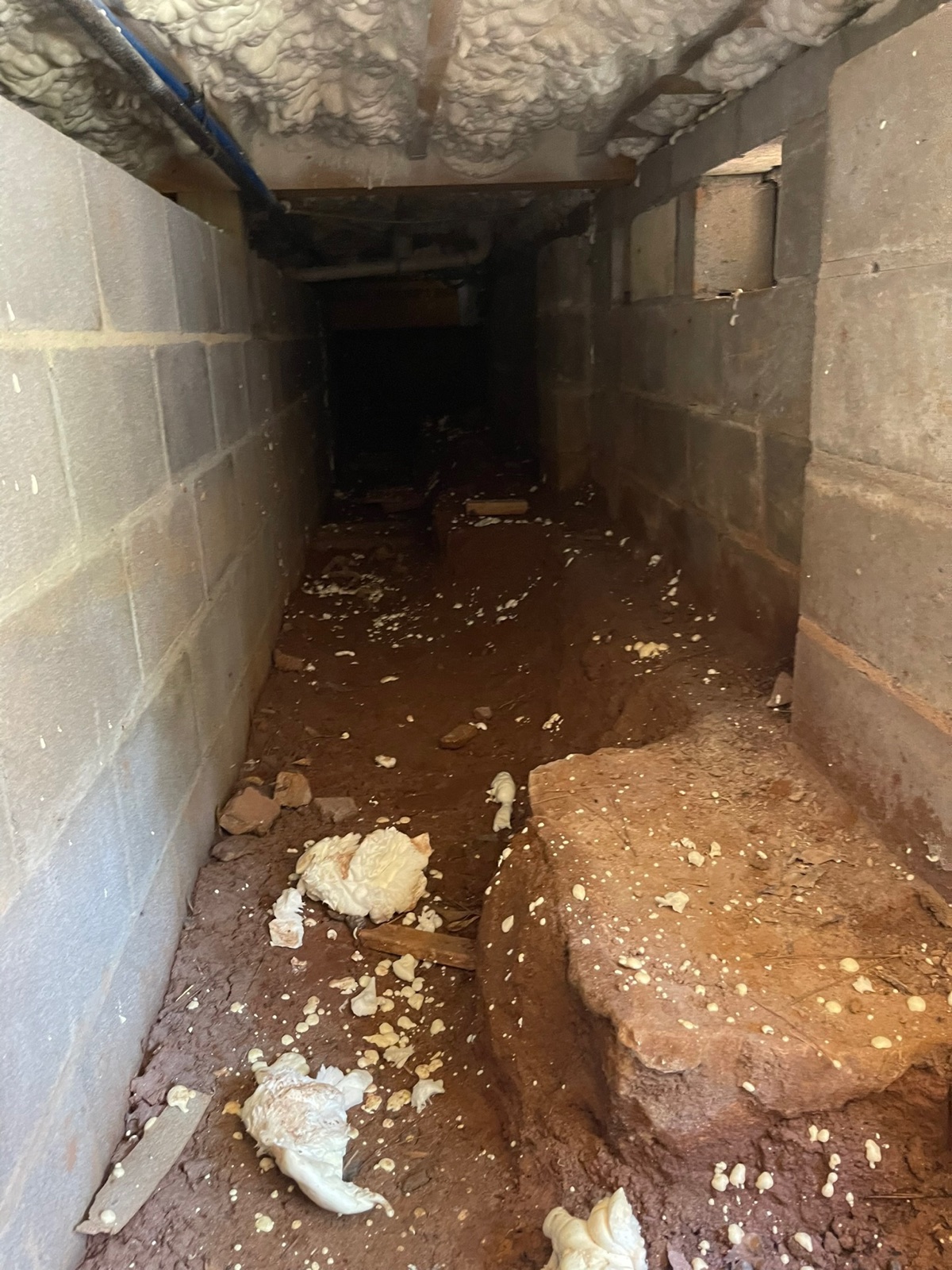
It depends on what got wet and for how long. Framing lumber and structural members can often be dried, treated, and reinforced if we get to them before rot sets in, and that's a lot of what we do. Vapor barriers and drainage can be cleaned or replaced. Soaked fiberglass insulation and saturated debris usually have to come out; they hold moisture and feed the next problem if you leave them.
Where we draw a clear line is mold. If there's active mold growth, that's a job for a licensed remediation specialist, not us. We'll flag it honestly and tell you what we handle versus what needs a specialist. We're not going to claim a scope we don't own.
Does homeowners insurance cover water damage?
Sometimes, and it hinges on the cause. A sudden, accidental event like a burst pipe is more likely to be covered than gradual groundwater seepage, which carriers often treat as a maintenance issue. Flooding from outside surface water is usually a separate flood policy entirely. We can't speak for your policy and won't pretend to, but we document what we find with photos and a clear write-up so you've got something solid to take to your carrier.
How is this different from basement waterproofing or foundation repair?
Think of water damage repair as the response to water that already got in, and the others as the long-term fix. We get the standing water out and stabilize what it hurt. But if the cause is groundwater pushing through your basement walls every storm, the real solution lives on our basement waterproofing side, with interior drainage and a sump so it stops coming in. And if the water undermined your footings or rotted the framing carrying your floors, that's foundation repair. We handle the cleanup and the cause together so you're not calling three companies.