Basement water, the straight version
How do you waterproof a basement?
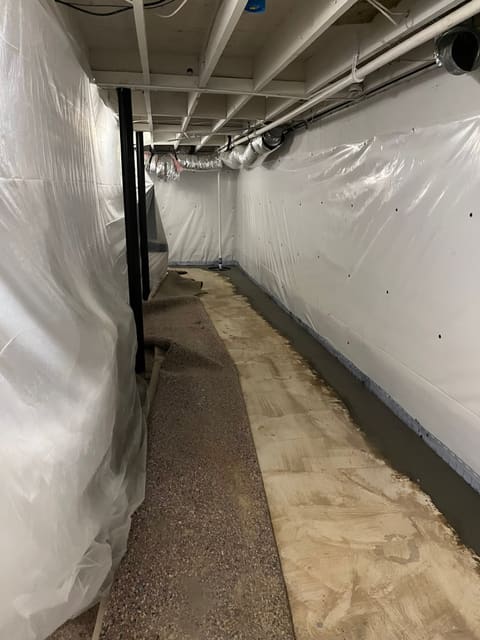
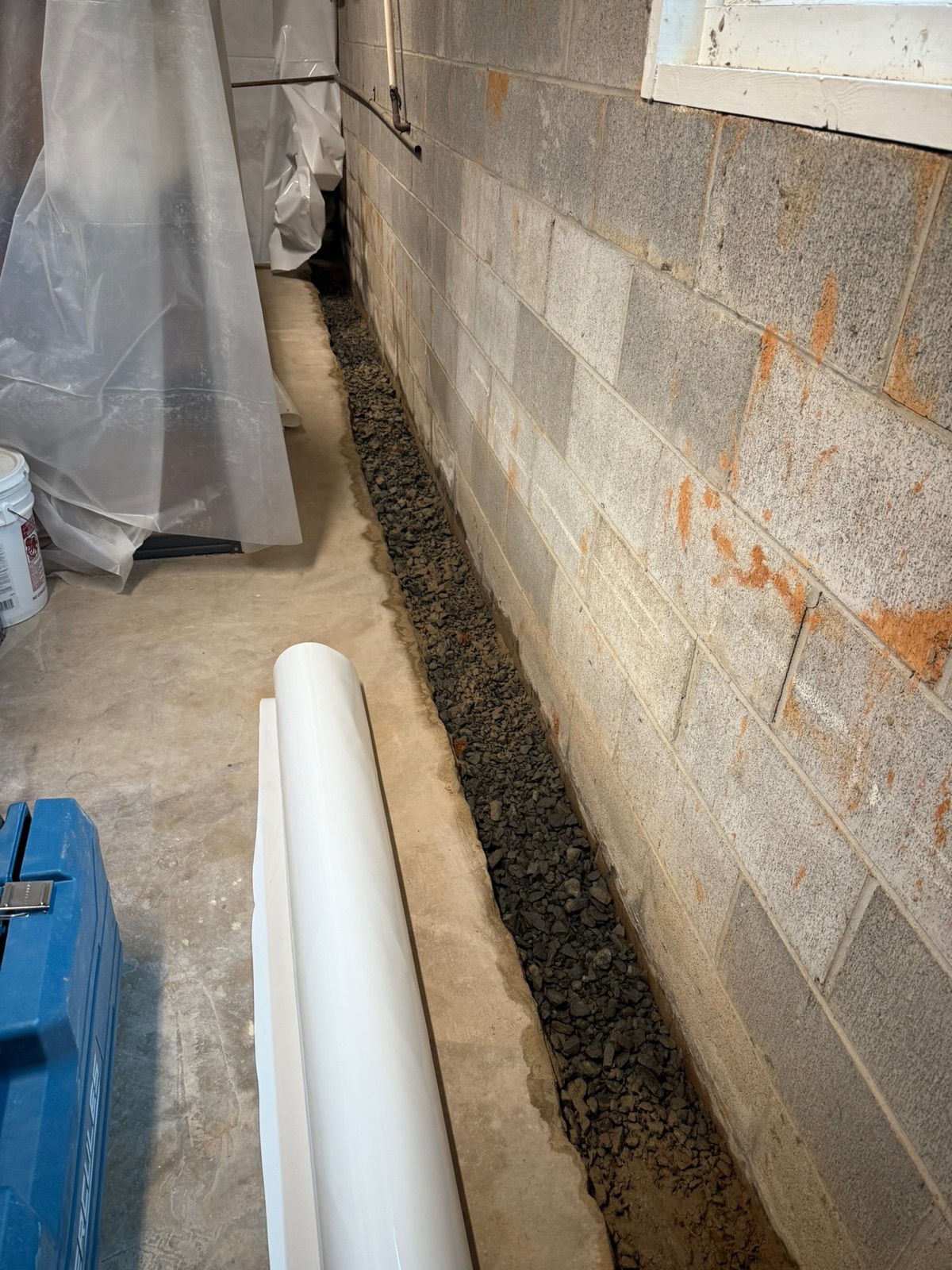
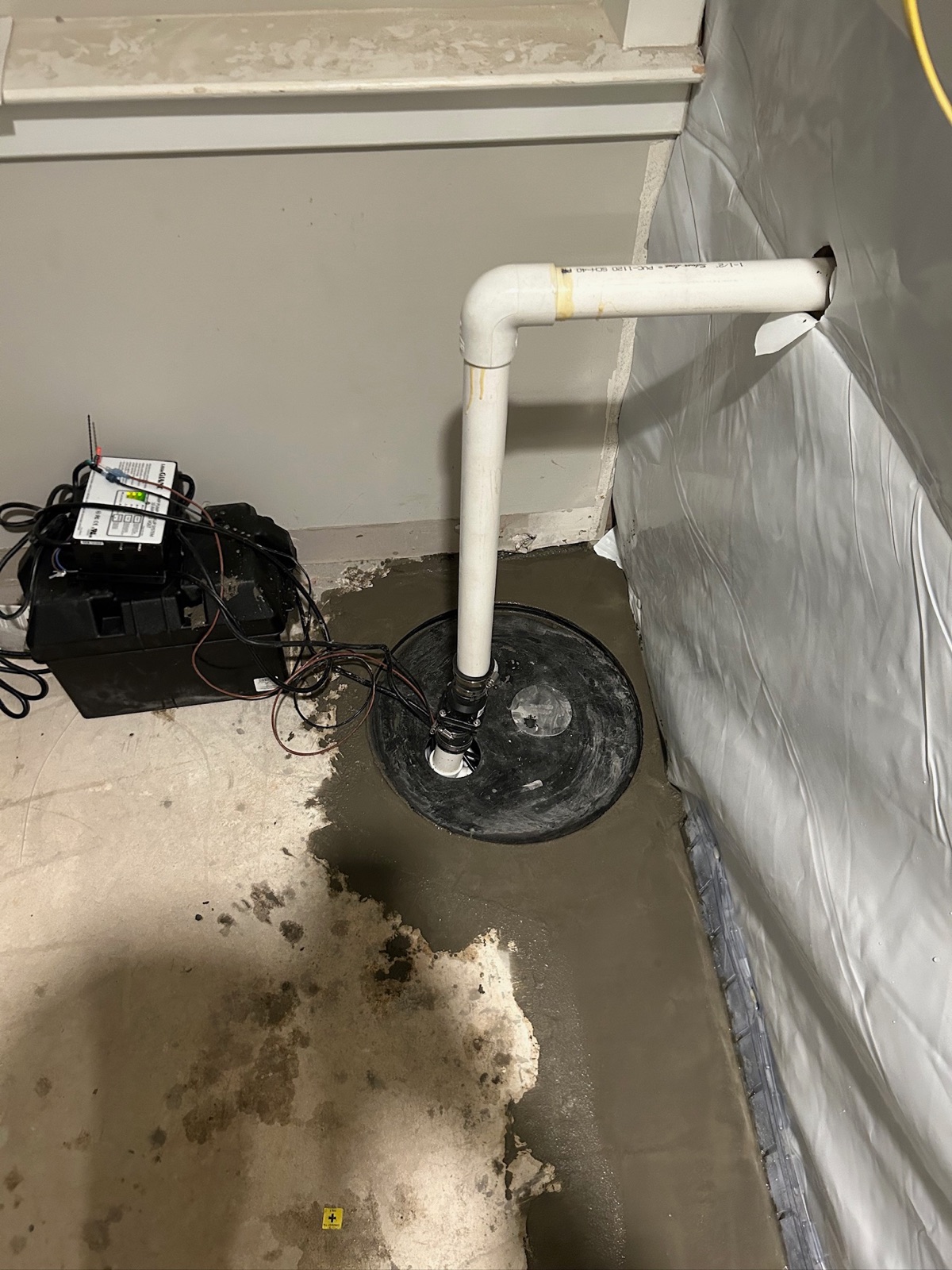
Waterproofing a basement means managing water at the points where it gets in and giving it somewhere to go. For most Atlanta basements that's a mix of three things: an interior drain at the footing that catches water and routes it to a sump pump, sealing the cracks and cold joints where water pushes through, and exterior work when the wall or the grade itself is the problem. The right combination depends on where your water is actually coming from.
Here's what each piece does:
- Interior drainage and a sump pump. An interior French drain at the footing collects water and the sump moves it out. This is the workhorse fix for the majority of Atlanta basements.
- Crack and cold-joint repair. We seal the foundation cracks and the wall-floor seam where water is pushing through under pressure.
- Exterior waterproofing. Excavating down to the footing, sealing the outside of the wall, and correcting the grade and drainage — the bigger job, reserved for when the wall or the slope of the yard is what's driving the water.
And if the pressure has the wall actively bowing or cracking, that crosses into structural territory — see our foundation repair work, because at that point you're stabilizing the wall, not just draining the floor.
Interior vs. exterior basement waterproofing: which do you need?
This is the decision most homeowners are really trying to make, so here's the honest comparison. The short version: interior work manages water once it reaches the foundation, and exterior work keeps it off the wall in the first place. One is not simply the upgrade of the other — they solve different problems, and which you need comes down to why your basement is wet.
| Interior waterproofing | Exterior waterproofing |
|---|
| What it is | Drain at the footing, sump pump, and crack sealing — all from inside | Excavate down to the footing, seal the outside of the wall, fix grading and drainage |
| Solves | Water that's already reaching the foundation | Water before it ever touches the wall |
| Invasiveness | Lower — works from inside, no digging up the yard | Higher — excavation around the house |
| Scale of job | Contained, often a day or two | The bigger, more involved job |
| Best when | Most Atlanta leaks — water entering at the floor-wall seam | The wall itself is failing, or the grade dumps water at the house |
Most homes do just fine with interior work, and that's what we recommend when it's the honest answer. We only point you toward exterior excavation when the problem genuinely calls for it — not to run up the invoice. And if the wet area turns out to be under a crawl space rather than a true basement, the fix is different again; that's crawl space waterproofing.
Why does water come into my basement after heavy rain?
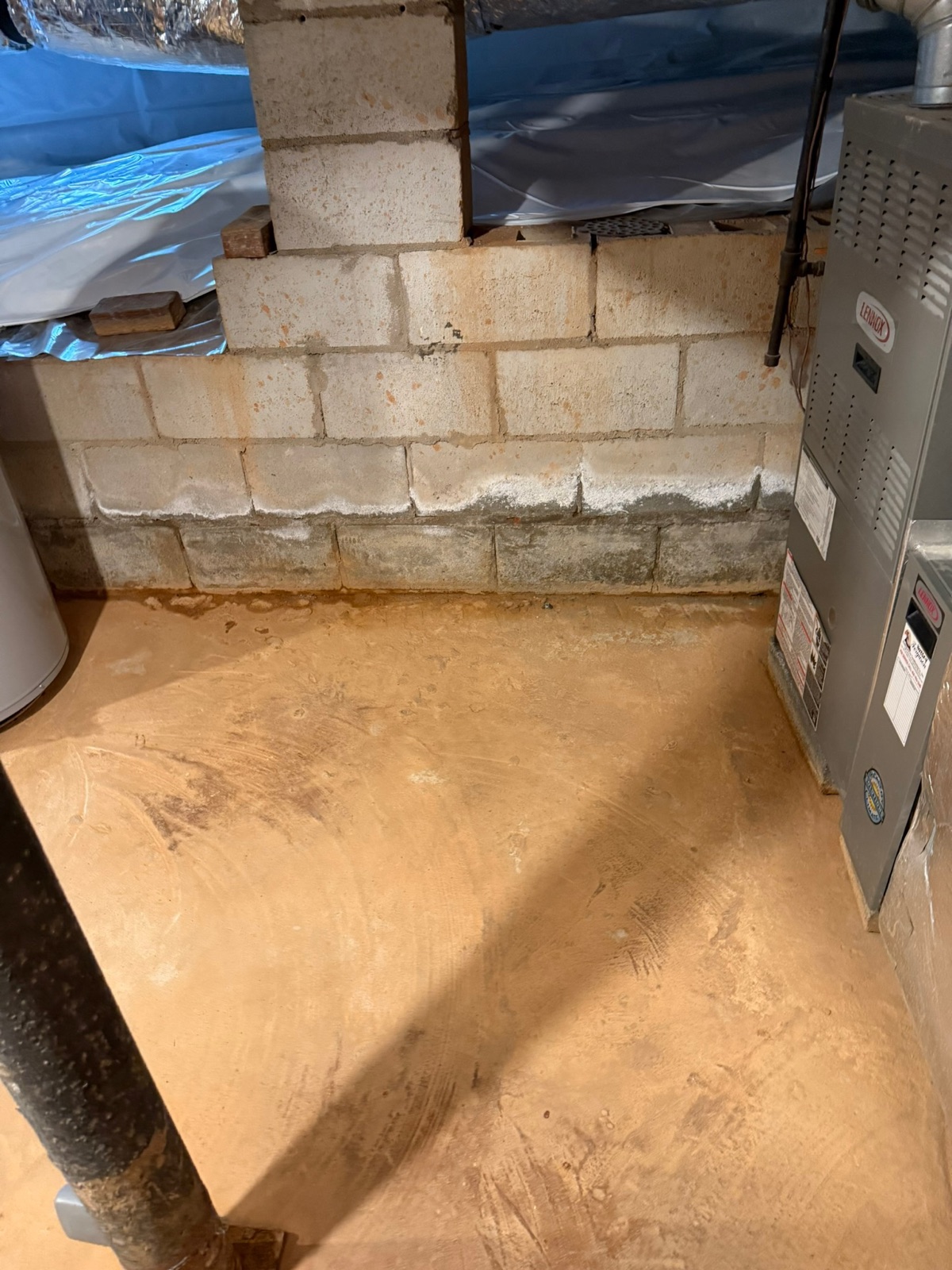
After a hard Atlanta rain, water saturates the clay around your foundation and builds pressure against the walls and floor. That force — hydrostatic pressure — pushes water through any crack, cold joint, or gap it can find. So the leak you see inside is really a drainage problem outside, which is exactly why patching the wet spot never holds: you have to manage the water, not just plug the hole where it shows up.
It's also why a basement can stay dry for months and then flood out of nowhere. The crack was always there; it took a saturated yard and enough pressure behind it to start moving water through.
Why do Atlanta basements leak in the first place?
It comes down to our soil. Atlanta sits on red clay, and red clay is expansive — it swells when it's wet, shrinks when it dries, and drains slowly the whole time. After a storm it holds water against your foundation long after the rain has stopped, and that standing water keeps the pressure up and finds the weak points in the wall.
Then there's the housing stock. A lot of homes around Decatur, Druid Hills, and Kirkwood were poured before modern drainage standards, often with no interior drain at all and footings that were never built for what our clay does over fifty years. We've spent enough time in Atlanta-area basements to know what your soil and your home's era tend to throw at us, and reading that right is half of getting the fix right.
What does basement waterproofing cost in Atlanta?
It depends on what's wrong and where the water's coming from, which is why the free inspection is where you get a real number. That said, we'd rather give you a starting point than hide behind "call for a quote." Interior drainage with a sump pump typically starts around $3,000. Exterior waterproofing — excavating to the footing and sealing the wall from outside — is the bigger, more expensive job, and it varies with complexity, soil, and how your yard drains.
| What affects the price | Why it moves the number |
|---|
| Interior vs. exterior | Exterior excavation is a substantially larger job than an interior drain and sump. |
| Length of the affected wall | More linear feet of footing means more drain to run and more wall to seal. |
| How the water's getting in | A single crack is a smaller fix than a wall leaking along its whole base. |
| Existing damage | Framing, flooring, or finishes the water already ruined add repair to the scope. |
| Grading and yard drainage | When the slope or downspouts dump water at the house, fixing that is part of the cure. |
| Finished vs. unfinished | Working around finished walls and flooring takes more care and time. |
The inspection is free, and we put the scope and price in writing before you commit. For bigger projects we offer interest-free financing, and every repair we make carries a 2-year warranty.